|
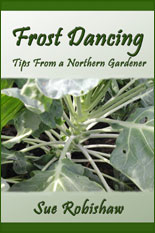
"Frost Dancing" is a friendly straight forward garden booklet free of fluff and
fuss, full to its short but sturdy brim with more than 240 tips from Sue's many
years of organic gardening. For gardeners of all abilities, with a sustainable
philosophy that is easy and natural. No matter where your garden is located,
you'll find help here.
Though our growing
season is short, there is never a year that the garden doesn't put plenty of food on
our table
and surplus to store. Sue shares from her gardening notes to help
you do the same.
Divided into five seasonal chapters there are tips for
every garden and gardener.
Excerpts from the book:
Late Winter -- Early Spring
Sort seed packets into small paper bags by type (tomatoes and peppers, coles, beans,
peas, greens, etc.) for ease when planting time comes. Store in a large tin or plastic
lidded bucket in a cool or cold area.
Compost makes good potting soil. Mix some sharp sand in with your compost if it is
heavy.
Flats can be made of any type of scrap lumber which hasn't been painted, stained, or
treated. Smaller flats for the first transplanting of seedlings, and for larger plantings
of seeds such as onions, can be 12" x 16" x 3".
Spring
If frost hits your garden unexpectedly get out early before the sun hits the garden and
water the plants. This can save some otherwise doomed plants.
Use a knife to cut between seedlings in flats a week before transplanting. This
separates the roots and allows them to recover before they are moved.
When the lilac and cherry leaves are out and the Trout Lilies are blooming it is time
to plant grains, peas, early and seed spinach, radishes, and direct seeded cole crops.
Swiss Chard is a very handy, and hardy, green -- it doesn't wilt in the heat of summer,
can be used in salads or as a cooked green, and it produces a lot of leaves for drying for
use in winter soups, stews, and casseroles.
Summer
In cold years continue to stack cold frames around selected tender plants as they grow.
If you started your squash plants inside and transplanted them into the garden pick off
the first blossom -- transplanted squash will sometimes set just this one fruit if you
don't remove it.
Strips torn from old cotton sheets make good tomato ties which will be kind to the
tender plants stems and can be used many times over.
Fall
Plant garlic when the frosts arrive, individual cloves from the best bulbs, about
3" apart, with a good mulch.
Make note of how many good blankets need to be left inside for the family's use so you
don't end up taking them all to cover the garden.
Use long handles pruners to chop up tough stemmed plants such as broccoli and corn as
the fruit is harvested. This will help hasten the decomposition process (builds great
muscles too!)
Early Winter
Dig and store finished compost for use as potting soil next spring (garbage cans make
good containers). Store in an area easily accessible from your potting area.
Junk mail envelopes, sealed and one end cut off, make good seed packets for home grown
seed. And home grown seed makes nice gifts -- most are great for winter sprout salads too.
~ ~ ~ ~ ~
Above excerpts from "Frost Dancing -- Tips from a Northern Gardener"
by Sue Robishaw
copyright 2000 Susan J. Robishaw
For more good ideas and information see
"Homesteading
Adventures"
 . .
For more articles on Gardening go to
the GARDEN page.
And go to the
HOMESTEAD
page for many articles on homestead life topics.
Back to top
Updated
07/24/2024
Copyright © 2015 by Sue Robishaw
|